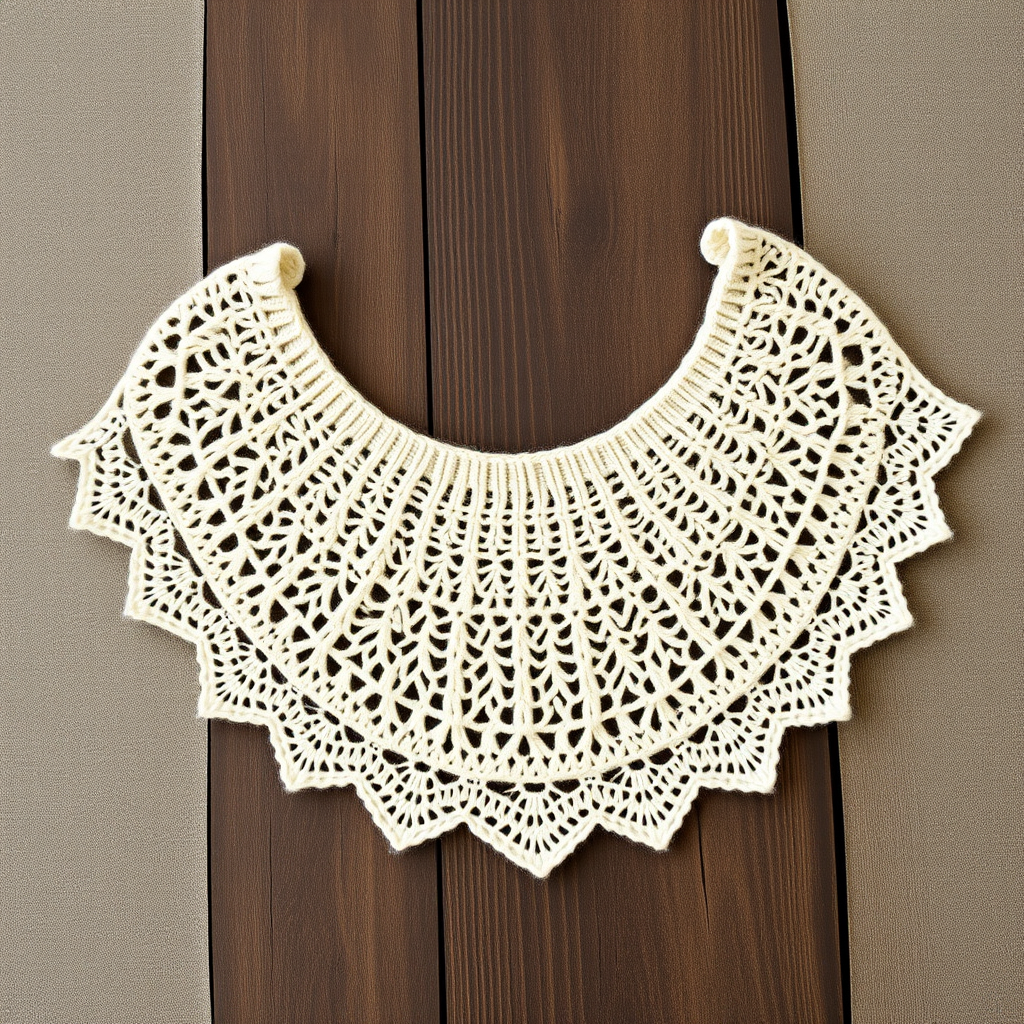
Midnight Garden Moth Shawl Free Pattern – Lace Knitted Wrap

Wrap Yourself in Moonlit Mystery: The Midnight Garden Moth Shawl
There are some knitting projects that transcend mere accessories—they become wearable poetry. The Midnight Garden Moth Shawl is exactly that: an ethereal, triangular wrap that captures the quiet enchantment of a moonlit garden. With its delicate moth-wing lace panels and a breathtaking twilight gradient, this shawl blends gothic elegance with botanical softness in a way that feels both timeless and utterly unique.
Whether you're drawn to the intricate lacework or the mesmerizing color transition from deep indigo through muted plum to soft silver-grey, this pattern offers a rewarding journey for knitters ready to stretch their skills. The result? A stunning, heirloom-quality piece that drapes elegantly and evokes the mysterious beauty of dusk. Let's dive into creating this masterpiece together.
Materials Needed
Before you begin, gather these supplies to ensure a smooth knitting experience:
- Yarn: Fingering weight yarn in 3 colors:
- Color A: Deep indigo (150g)
- Color B: Muted plum (150g)
- Color C: Soft silver-grey (100g)
- Needle: US 6 (4.0 mm) circular knitting needle with a 32-inch cable (long enough to accommodate the growing stitch count).
- Notions: Stitch markers (at least 2), tapestry needle for weaving in ends, blocking pins and mats.
- Gauge: 20 stitches and 28 rows = 4 inches in stockinette stitch (blocked). Gauge is important for achieving the correct drape, so take a moment to swatch!
Step-by-Step Instructions
This shawl is worked top-down in a triangular shape, featuring a central spine and two symmetrical "wing" sections. The gorgeous gradient is created by a simple stripe sequence, transitioning gradually from one color to the next. Follow along carefully, and you'll be amazed at how the lace comes to life.
Abbreviations
- k = knit
- p = purl
- yo = yarn over
- k2tog = knit two together (right-leaning decrease)
- ssk = slip, slip, knit (left-leaning decrease)
- pm = place marker
- sm = slip marker
- rep = repeat
Setup: Casting On and Creating the Foundation
With Color A (deep indigo), cast on 3 stitches.
- Row 1 (WS): k3.
- Row 2 (RS): k1, yo, k1, yo, k1 (5 stitches).
- Row 3: k2, p1, k2.
- Row 4: k1, yo, k1, yo, pm, k1, pm, yo, k1, yo, k1 (9 stitches).
Tip: The center stitch between the markers will become the spine of your shawl. Keep those markers in place throughout the project.
Increase Section: Building the Garter Stitch Base
This section establishes the triangular shape using simple garter stitch with increases at the edges and on each side of the center spine.
- Row 5 (WS): k2, p to last 2 sts, k2.
- Row 6 (RS): k1, yo, k to marker, yo, sm, k1, sm, yo, k to last st, yo, k1. (This increases 4 stitches: one at each edge and one on each side of the center.)
Repeat Rows 5-6 until you have 45 stitches total (approximately 9 repeats). End with a WS row.
Lace Wing Section: Creating the Moth Wings
Now the magic begins! You'll continue the edge and center increases on every RS row, but you'll work a beautiful lace pattern between the edge and the center marker on each side. This creates the delicate, wing-like panels.
Lace Pattern (multiple of 6 + 1):
- Row 1 (RS): k1, *yo, ssk, k3, yo, k1; rep from * to marker, sm, k1, sm, rep from * to last st, k1.
- Row 2 (WS): k2, p to last 2 sts, k2.
- Row 3: k1, *k2, yo, ssk, k1, yo, k1; rep from * to marker, sm, k1, sm, rep from * to last st, k1.
- Row 4: Same as Row 2.
- Row 5: k1, *k3, yo, ssk, k1, yo, k1; rep from * to marker, sm, k1, sm, rep from * to last st, k1.
- Row 6: Same as Row 2.
- Row 7: k1, *k4, yo, ssk, k1, yo, k1; rep from * to marker, sm, k1, sm, rep from * to last st, k1.
- Row 8: Same as Row 2.
Important: While working these 8 rows, continue the edge and center increases on every RS row (as you did in the Increase Section). The increases will add stitches to the lace pattern, so the repeats will naturally expand outward.
Color Transitions:
- Complete 4 full repeats of the 8-row lace pattern in Color A.
- Switch to Color B (muted plum) and work 4 more repeats.
- Switch to Color C (soft silver-grey) and work 4 repeats.
Pro Tip: When changing colors, do so at the beginning of a RS row for a clean, seamless transition. Weave in ends as you go to minimize finishing work.
Final Decrease Section: Shaping the Point
After completing the lace sections, it's time to shape the bottom point of the shawl.
- Garter Stitch Transition: Work in garter stitch (knit every row) for 6 rows, continuing the edge and center increases on RS rows.
Now begin decreasing to close the shawl:
- Row 1 (RS): k1, ssk, k to 2 sts before marker, k2tog, sm, k1, sm, ssk, k to last 3 sts, k2tog, k1. (Decreases 4 stitches: two at each edge and two at the center.)
- Row 2 (WS): k all.
Repeat these 2 rows until 5 stitches remain.
Final Row (RS): k1, ssk, k2tog, k1 (3 stitches). Bind off loosely.
Finishing: Blocking Your Masterpiece
Blocking is essential for lace—it opens up the stitches and reveals the true beauty of the pattern.
- Weave in all remaining ends with your tapestry needle.
- Soak the shawl in lukewarm water with a drop of wool wash for 20 minutes.
- Gently squeeze out excess water (do not wring or twist).
- Lay flat on a clean towel and roll up to remove more water.
- Shape into a triangle on a blocking mat, gently stretching the lace points.
- Pin the edges to create a scalloped effect if desired, emphasizing the moth-wing shape.
- Allow to dry completely before unpinning.
Your Twilight Garden Awaits
As you remove the pins and lift your finished Midnight Garden Moth Shawl, you'll see the fruits of your labor: a stunning gradient of twilight colors, intricate lace that mimics delicate wings, and a drape that feels both luxurious and ethereal. This shawl isn't just an accessory—it's a statement piece that whispers of moonlit gardens and quiet mysteries.
Whether you wear it draped over your shoulders on a cool evening or gift it to someone who appreciates the art of handmade beauty, this shawl is sure to become a treasured heirloom. The combination of gothic elegance and botanical softness makes it versatile enough for both casual and formal occasions.
Happy knitting, and may your stitches always be even and your yarn never tangle!