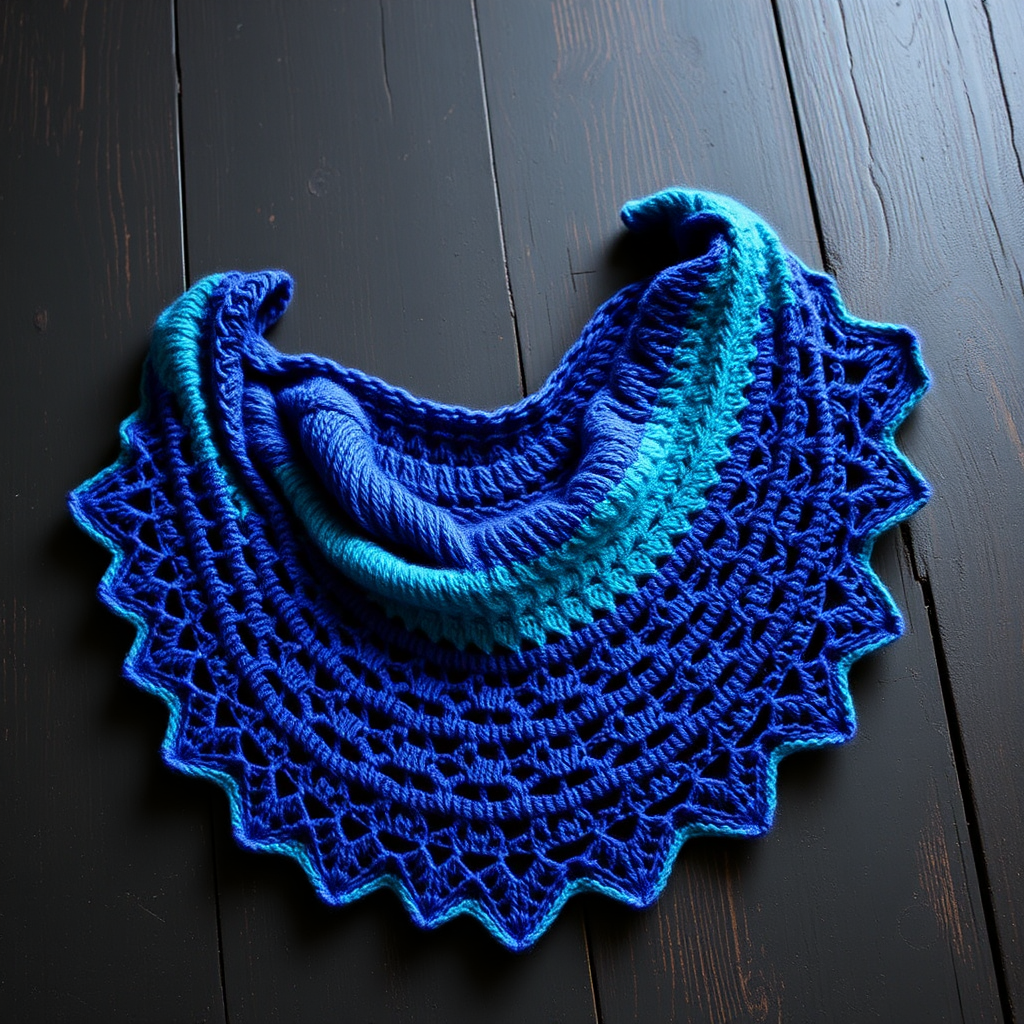
Quinley Sideways Shawl Free Pattern – Cascading Lace & Garter Knit

Quinley Sideways Shawl Free Pattern – Cascading Lace & Garter Knit
Wrap yourself in the gentle rhythm of the Quinley Sideways Shawl, a crescent-shaped knit that flows from a single point outward in soft, organic waves. This pattern blends airy lace with cozy garter stitch, creating a versatile accessory that drapes beautifully over any shoulder. Whether you're a seasoned knitter looking for a mindful project or a confident beginner ready to stretch your skills, this sideways-knit shawl offers a rewarding journey with a stunning, wearable result.
The unique construction—knitting from one edge to the other—creates a naturally elegant crescent silhouette. The body is a soothing rhythm of garter stitch, punctuated by a delicate lace panel that cascades along the curved edge like falling leaves. The finished piece is both cozy and refined, evoking a sense of woodland serenity that pairs perfectly with everything from jeans to evening wear.
Materials Needed
Before you begin, gather the following supplies to ensure a smooth and enjoyable knitting experience:
- Yarn: Fingering weight yarn, approximately 400–450 yards. The sample shown uses a soft heather sage green, but any fingering weight yarn will work beautifully. Choose a color that speaks to you—earthy tones, dusty blues, or warm neutrals all complement this pattern's organic feel.
- Needle: US 6 (4.0 mm) circular needle, 32 inches or longer. The long circular needle is essential to accommodate the growing number of stitches as the shawl expands.
- Notions: Stitch markers (at least one), tapestry needle for weaving in ends, blocking mats and pins for finishing.
- Gauge: 20 stitches and 28 rows = 4 inches in garter stitch (blocked). While gauge is important for size, this shawl is forgiving—a slightly looser or tighter gauge will simply alter the final dimensions slightly.
Step-by-Step Instructions
This shawl is knit sideways from the left edge to the right edge, with increases along one side to create the crescent shape. The pattern is written for one-piece construction, with the lace border emerging naturally as you work. Follow along carefully, and you'll be amazed at how the shape develops.
Abbreviations
- k = knit
- p = purl
- yo = yarn over
- k2tog = knit two together
- ssk = slip, slip, knit (slip two stitches knitwise, then knit them together through back loops)
- kfb = knit front and back (increase)
- pm = place marker
- sm = slip marker
- BO = bind off
Special Stitch Pattern (Lace Panel)
This lace panel is worked over 8 stitches. It creates the delicate, openwork pattern along the curved edge. Repeat these 8 rows continuously throughout the body of the shawl.
- Row 1 (RS): k2, yo, ssk, k4
- Row 2 (WS): k4, yo, k2tog, k2
- Row 3: k2, yo, ssk, k4
- Row 4: k4, yo, k2tog, k2
- Row 5: k2, yo, ssk, k4
- Row 6: k4, yo, k2tog, k2
- Row 7: k2, yo, ssk, k4
- Row 8: k4, yo, k2tog, k2
Note: The lace panel rows are identical on both RS and WS, which makes this pattern wonderfully rhythmic and easy to memorize. The yarn overs create the eyelet holes, while the decreases (ssk and k2tog) keep the stitch count consistent.
Setup
We begin with a simple triangular point that will become the left edge of the shawl.
- Cast on 3 stitches.
- Row 1 (RS): kfb, k1, kfb (5 stitches)
- Row 2 (WS): knit all stitches.
- Row 3: kfb, k3, kfb (7 stitches)
- Row 4: knit all stitches.
- Row 5: kfb, k5, kfb (9 stitches)
- Row 6: knit all stitches.
- Row 7: kfb, k7, kfb (11 stitches)
- Row 8: knit all stitches.
You now have 11 stitches on your needle, and the foundation of your shawl is complete. The increases at both ends of these setup rows create a gentle point that will anchor the left side of your crescent.
Body of Shawl (Sideways Increase)
Now the real magic begins. You will work the main body of the shawl, increasing at the beginning of each right-side row and working the lace panel at the end. This creates the asymmetrical growth that forms the crescent shape.
- Row 1 (RS): kfb, knit to last 8 stitches, pm, work Lace Panel Row 1 over next 8 stitches.
- Row 2 (WS): work Lace Panel Row 2 over first 8 stitches, sm, purl to end.
Important Note on Body Stitch: The instructions above call for purling the body stitches on the wrong side, which creates a subtle stockinette contrast against the garter stitch edges. However, if you prefer a fully garter stitch body for a more uniform texture, simply knit all stitches on the wrong side instead of purling. Both options create a beautiful shawl—choose the one that appeals to you most.
Repeat these two rows, always working the Lace Panel rows in sequence (Rows 1–8, then repeat from Row 1), and increasing with kfb at the beginning of every right-side row. The stitch marker helps you remember where the lace panel begins—slip it on every row as you pass it.
Continue this pattern until the shawl measures approximately 60 inches along the straight (non-lace) edge, or until you have used most of your yarn, leaving enough for the bind-off. As a general guide, you should have roughly 10–15 yards remaining when you're ready to bind off. The shawl will look like a long, growing triangle at this point—don't worry, the crescent shape emerges during blocking.
Bind-Off Edge
When you've reached your desired length, it's time to finish the right edge.
- On a right-side row, knit all stitches (including the lace panel) without increasing. This creates a clean, even edge.
- Bind off all stitches loosely. For the best results, use a stretchy bind-off method. Here's a reliable lace bind-off:
- Knit 2 stitches.
- *Slip both stitches back to the left needle, k2tog through back loops, k1.
- Repeat from * until all stitches are bound off.
This bind-off technique creates a flexible, elastic edge that mirrors the drape of the lace and prevents the shawl from pulling or puckering along the top edge.
Finishing
The final steps are crucial for transforming your knitted fabric into the beautiful crescent shawl you envisioned.
- Weave in all ends using your tapestry needle. Take care to weave them in along the edges or through matching stitch patterns so they're invisible from the right side.
- Soak the shawl in lukewarm water with a gentle wool wash for 20 minutes. This allows the fibers to relax and open up.
- Gently squeeze out excess water—do not wring or twist, as this can felt or distort the yarn.
- Lay flat on a towel and roll up to remove more water. Press gently to absorb moisture.
- Block the shawl: Lay it flat on blocking mats, pinning out the lace points along the curved edge to open up the pattern. The straight (top) edge should be pinned in a gentle curve, and the lace edge should be stretched to reveal the eyelets and scalloped points. Take your time with this step—proper blocking transforms the shawl from a simple triangle into the elegant crescent shape.
- Allow to dry completely before unpinning. This may take 24–48 hours depending on your climate.
Once dry, your Quinley Sideways Shawl is ready to wear. The finished piece will measure approximately 60 inches across the top edge and 20 inches at the deepest point, with a delicate, open lace border that catches the light beautifully.
Tips for Success
- Count your stitches regularly—especially during the lace panel—to catch any missed yarn overs or decreases early.
- Use a lifeline every 10–20 rows through the body of the shawl. If you make a mistake, you can easily rip back to the lifeline without losing your progress.
- Trust the process. The shawl will look like a long, narrow triangle while knitting. The crescent shape only emerges during blocking, so don't be alarmed if it doesn't look like the finished photo yet.
- Choose your yarn wisely. A yarn with good stitch definition, like a wool or wool-blend fingering weight, will showcase the lace pattern beautifully. Highly textured or heavily variegated yarns may obscure the delicate eyelets.
The Quinley Sideways Shawl is more than just an accessory—it's a meditative knitting experience that rewards you with a timeless, handcrafted piece. Whether you're knitting it for yourself or as a gift for someone special, the gentle rhythm of garter stitch and lace will keep you company through many cozy evenings. Happy knitting!